
Comprehensive Technical Analysis of POM Polyoxymethylene (Acetal/Delrin): Mechanical Properties, Wear Resistance, and Precision Component Design Guide
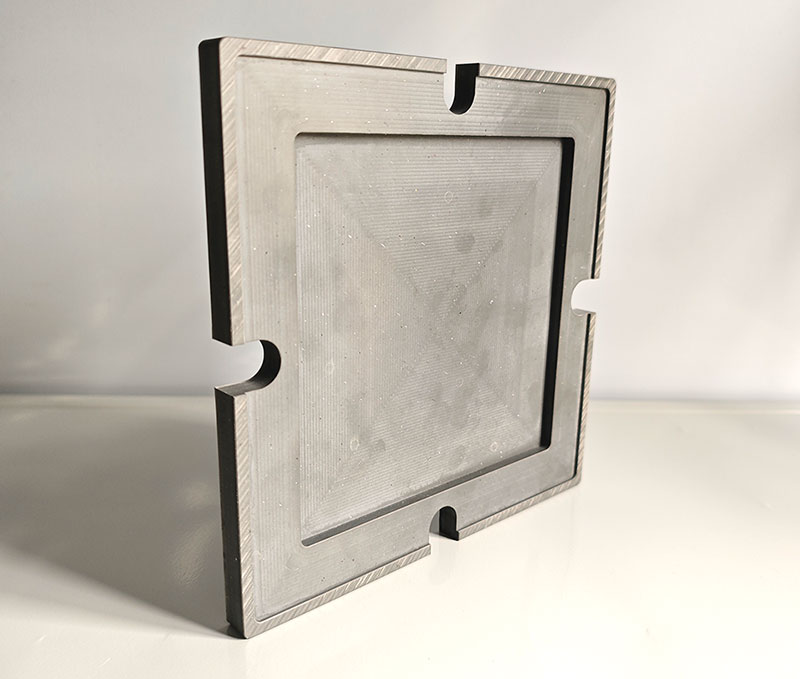
In precision mechanical transmission and automation equipment, POM polyoxymethylene has become an ideal engineering plastic for metal replacement, thanks to its excellent stiffness, low coefficient of friction, and good dimensional stability. It is commonly called acetal or Delrin, names that reflect its metal-like strength and surface hardness. This article provides an in-depth analysis of the key properties and design considerations of POM from both materials science and engineering application perspectives.
1. Basic Composition and Classification of POM Polyoxymethylene
POM (Polyoxymethylene) is a highly crystalline linear polymer with a main chain composed of (–CH₂O–) repeating units. Based on the polymerization method, it is divided into two types:
Homopolymer POM: Obtained by polymerizing formaldehyde or trioxane. It has slightly higher crystallinity, mechanical strength, and stiffness than copolymers, but lower stability in hot or acidic/alkaline environments. A typical grade is DuPont™ Delrin®.
Copolymer POM: Introduces a small amount of comonomer (e.g., ethylene oxide) during polymerization, creating carbon-carbon bonds that interrupt the acetal chain. This provides better thermal stability and chemical resistance, making it less prone to thermal and acidic degradation. Typical grades include Polyplastics Duracon® and Celanese Hostaform®.
In industrial practice, copolymer POM is more widely used due to its wider processing window and improved resistance to hot water and alkalis.
2. Key Mechanical Properties
The mechanical performance of POM ranks among the highest of unfilled engineering plastics:
Tensile strength: 60–70 MPa (homopolymer slightly higher at ~70 MPa, copolymer ~60 MPa)
Flexural modulus: 2.4–3.0 GPa, indicating high stiffness
Notched impact strength: 6–9 kJ/m² (toughness is moderate but better than most crystalline plastics)
Surface hardness: Rockwell M80–M90, with outstanding wear resistance
Elongation at break: 15%–35%, showing certain ductility
Of particular note are its very low dynamic coefficient of friction (0.15–0.35 under dry friction, can drop to 0.05 when lubricated) and excellent fatigue resistance – capable of millions of stress cycles without fatigue failure. These properties make POM an ideal material for gears, cams, sliders, bearing cages, and conveyor chain plates.
3. Thermal Properties and Long-Term Service Temperature
POM has a melting point of approximately 165–175°C (homopolymer slightly higher). Its heat deflection temperature under 1.82 MPa is about 110–120°C. The long-term continuous operating temperature ranges from -40°C to 100°C; short-term use up to 140°C is possible under no load. Note that POM can undergo thermal degradation when overheated, releasing formaldehyde gas. Copolymer POM retains over 70% of its tensile strength after aging in air at 120°C for 1000 hours.
4. Chemical Resistance and Environmental Stability
POM exhibits good resistance to most organic solvents (gasoline, diesel, ethanol, oils, dilute acids, and mild alkalis), but it is not resistant to strong acids (sulfuric acid, nitric acid) or strong oxidizers. Homopolymer POM is sensitive to hot water and alkaline environments, while copolymer POM significantly improves this weakness. POM’s water absorption is very low (0.2%–0.3%), resulting in minimal dimensional change and allowing continuous operation underwater.
5. Typical Application Examples
Precision drive components: gears in printers/copiers, clock gears, automotive wiper drive gears, window regulator sliders.
Conveying and clamping elements: food machinery conveyor chain plates, bottle line guide rails, escalator rail wear strips.
Fluid handling components: pump impellers, valve cores, spray nozzles, internal parts of water meters (copolymer preferred for durability).
Electrical insulation parts: switch cams, relay bases, coil bobbins – POM offers excellent electrical insulation with breakdown voltage >20 kV/mm.
6. Processing Considerations
POM can be molded by injection molding, extrusion, or blow molding. For injection molding, barrel temperature is typically set to 180–210°C (slightly lower for homopolymer), with mold temperature at 70–100°C to achieve high crystallinity and surface gloss. POM melt flows well, but its shrinkage rate is relatively high (1.5%–2.5%), requiring compensation during mold design. Additionally, POM should not be compounded with PVC or halogen-containing flame retardants, as this accelerates decomposition.
7. Conclusion
POM polyoxymethylene (acetal/Delrin), with its high stiffness, low coefficient of friction, excellent fatigue resistance, and chemical tolerance, occupies an irreplaceable position in metal replacement and precision transmission applications. Correctly distinguishing between homopolymer and copolymer types and selecting based on operating temperature, media contact, and fatigue requirements will greatly enhance part life and reliability.
Comprehensive Technical Analys
 How to Choose PORON Foam and R
 Graphene Heat Spreader, Therma
 Thermal Conductive Silicone Pa