
How to Choose PORON Foam and Rogers Foam? A Practical Guide from Consumer Electronics to Rail Transit
Ⅰ. What Is PORON: More than a Material Name
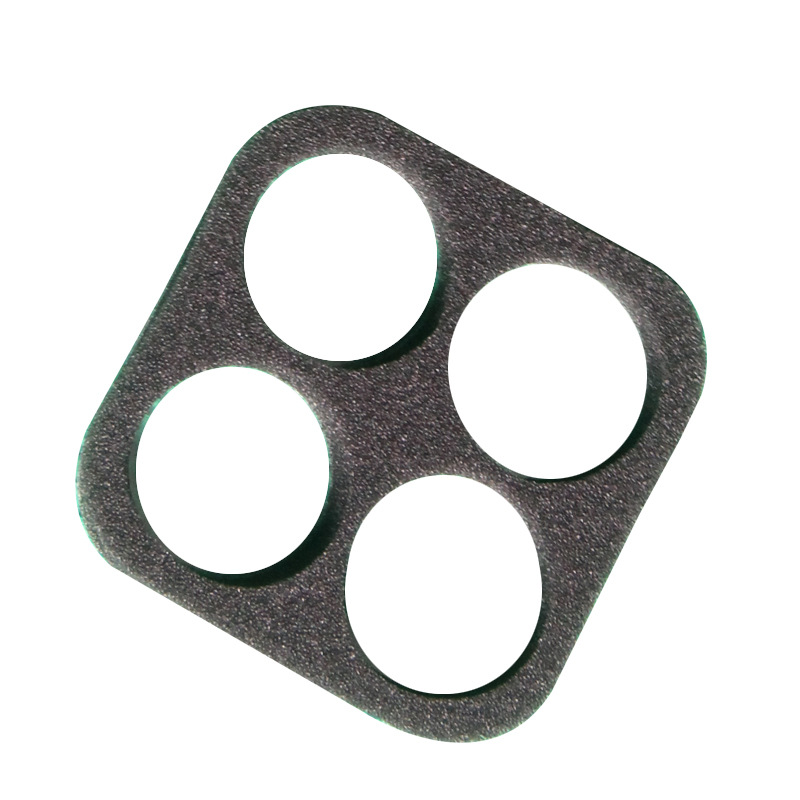
Many engineers and procurement professionals are often confused about whether to use PORON or other Rogers foam products. Here is the truth: PORON is actually Rogers Corporation‘s registered trademark for microcellular polyurethane foam, not a generic material name. With the proliferation of handheld devices such as mobile phones and tablets, the PORON brand has gradually become synonymous with “high‑performance polyurethane foam” within the industry. Currently, besides Rogers USA, suppliers such as Japan’s INOAC Group also produce similar grade microcellular polyurethane foam. However, material thickness metric standards, cell uniformity, and batch consistency vary between suppliers. For instance, inch‑based thickness specifications (e.g., 3.18 mm, 4.76 mm, 6.35 mm) do not directly align with metric‑based ones (1–7 mm). Therefore, when procuring materials, confirming thickness tolerances and compression performance consistency across batches is more meaningful than relying solely on brand names.
Ⅱ. Common PORON Series and Typical Applications
| Series/Model | Recommended Scenario | Key Parameter Notes |
|---|---|---|
| PORON 4790-92 series | Extra‑soft slow rebound, low‑frequency vibration isolation & gap filling | Thickness 0.53–12.7 mm, PET reinforcement |
| PORON 4701-30 | Extra‑soft & easily compressible, filling between PCB and housing | Density varies by spec, suitable for halogen‑free applications |
| PORON 40V0 series | UL 94 V‑0 flame‑rated, EV battery packs/data centers | 3 mm thickness achievable, 11 pcf density, siloxane‑free & halogen‑free |
| PORON AquaPro series | High‑humidity/immersion environments, water‑resistant sealing | Density 224–400 kg/m³, compression stress 42–120 kPa |
| PORON ReSource30 | Sustainability‑driven projects, recycled content + bio-based raw materials | Maintains traditional PORON performance advantages |
| PORON ShockSeal 79 series | Drop impact protection behind display, module crash resistance | Designed specifically for handheld devices |
Ⅲ. BISCO Series:Who Needs Silicone Foam?
The value of the BISCO silicone foam series is especially prominent in the following three scenarios:
Scenario 1: Intense UV, ozone, and wind‑driven rain environments(outdoor enclosures, photovoltaic combiner boxes, communication cabinets). BISCO silicone foam exhibits no UV degradation per SAE J-1960, an ozone effect rating of zero cracks per ASTM D-1171, and no staining per ASTM D-925. In contrast, polyurethane is prone to yellowing and chalking under prolonged outdoor exposure.
Scenario 2: Ultra‑low stress relaxation and demanding recovery requirements(repeatedly opened/closed sealed cabinet doors, rail HVAC gaskets). The low stress relaxation of BISCO silicone foam can significantly reduce maintenance costs caused by gasket compression deformation, saving both labor and material expenses associated with repeated replacement.
Scenario 3: Wide temperature range and high‑temperature resistance(industrial oven heat shields, EV thermal management interfaces, aerospace). Silicone foam maintains its elasticity and sealing capability at elevated temperatures, with select grades capable of long‑term stable operation at 200°C.
Ⅳ. Three Common Misconceptions in Selection
Misconception 1: PORON foam is all non‑flame‑rated; BISCO foam is all flame‑rated. In fact, PORON includes dedicated V‑0 flame‑rated variants (e.g., 40V0 series), while BISCO silicone likewise includes non‑flame‑rated grades. Always reference the manufacturer‘s flame certification rather than assuming based on material chemistry alone.
Misconception 2: All open‑cell foams are permeable to water. Although PORON has an open‑cell structure, its micro‑scale cells can block liquid water ingress through surface tension effects, providing a degree of water‑resistant sealing capability. For products that must operate long‑term in humid or light water splash environments, employing PORON with proper compression design can deliver adequate waterproof performance.
Misconception 3: Thicker foam always means better cushioning. The compression curve determines cushioning effectiveness. If the closure force cannot compress a thick foam down to its designed stress plateau, gaps may appear due to poor contact, allowing dust or moisture ingress. Always refer to the compression force deflection curve from the material datasheet before selecting thickness and hardness.
Ⅴ. Procurement & Application Checklist
Before mass procurement, verify the following items:
Confirm the exact material full name and batch number(e.g., “PORON 4790-92-15039-04P” or “BISCO HT-800”).
Verify environmental and regulatory compliance: EU RoHS halogen‑free report, UL flame rating certificate, REACH declaration, VOC/low outgassing report (critical for sealed enclosures).
Confirm processing compatibility: Whether single‑sided or double‑side PSA adhesive is required; whether downstream processes such as stretching, slotting, or laminating are needed.
Obtain small‑batch samples for simulation or pressure‑deflection testing to validate actual compression behavior and long‑term creep performance under target closure force.
For outdoor applications, request UV aging test reports (e.g., SAE J-1960) and ozone test reports (ASTM D-1171), and confirm thickness retention after temperature‑humidity cycling.
Ⅵ. One‑Table Selection Guide
| Your Requirement | Recommended Material Series | Selection Logic |
|---|---|---|
| Phone mid‑frame cushioning, TWS earphone seals | PORON 4701-30 or PORON 40V0 | Easy processing, V‑0 flame‑rated options available |
| EV battery pack gap fillers, energy storage acoustic insulation | PORON 40V0 | V‑0 flame rating with integrated damping and acoustic isolation |
| Outdoor antenna cabinets, PV combiner box door gaskets | BISCO HT-800 or HT-820 | UV resistance, ozone resistance, wind‑driven rain tolerance |
| Rail seat underframe cushioning, HVAC unit seals | BISCO BF-2000 or HT-800 | Low smoke/toxicity standards, long‑term weather resistance |
| Sustainable low‑carbon design | PORON ReSource30 | Recycled + bio‑based content, maintains traditional performance |
Ⅶ. Conclusion
PORON foam and the broader Rogers Foam family serve as the invisible backbone of electronic products, playing critical roles in cushioning, sealing, vibration isolation, and even thermal management. Understanding their product families, core properties, and performance boundaries can elevate a product from “barely sufficient” to “reliable and durable.” In your next product design or procurement specification, consider specifying exact material grades and processing requirements—turning foam selection from a guessing game into quantitative engineering decisions.
 Comprehensive Technical Analys
How to Choose PORON Foam and R
Comprehensive Technical Analys
How to Choose PORON Foam and R
 Graphene Heat Spreader, Therma
 Thermal Conductive Silicone Pa