
DuPont Nomex Insulation Paper – Complete Technical Analysis of High-Performance Aromatic Polyamide Insulation Material
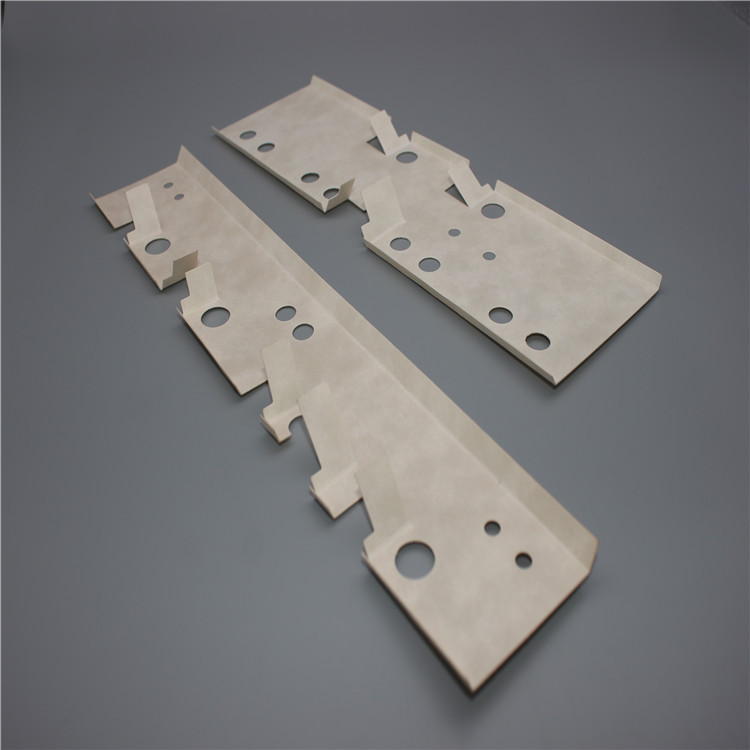
Nomex insulation paper, also known as Nomex aramid paper, is an aromatic polyamide synthetic material first developed and commercialized by DuPont in the 1960s. Following its launch in 1967, it has become a benchmark product in the global electrical insulation industry. Its exceptional balance of properties makes it indispensable in electrical insulation systems for transformers, generators, motors and new energy equipment.
1. Material Composition and Manufacturing Process
Nomex insulation paper is produced by mixing two forms of aromatic polyamide polymer fibers—short fibers (floc) and microscopic fibrous binder particles (fibrids)—into a water-based slurry, which is then densified into a continuous sheet structure through high-temperature calendering. Continuous optimization of the wet-laid forming and high-temperature calendering processes has elevated the dielectric strength to 18-40kV/mm while significantly enhancing mechanical toughness, enabling direct use in electrical equipment without varnish or resin treatment, effectively reducing production costs and improving insulation reliability.
2. Product Series Comparison and Selection Guide
Nomex 200 Series: Designed specifically to meet the requirements of battery packs and electronic applications, suitable for battery management systems and consumer electronics where insulation performance and space efficiency are critical.
Nomex 300 Series: Suitable for less demanding electrical applications such as white goods, power tools and small HVAC units. Nomex 356 is a medium-density aramid paper used for layer insulation in liquid-immersed transformers (with or without diamond dot coating), applicable to liquid-immersed distribution transformers.
Nomex 400 Series: The most widely used general-purpose product line, offering an ideal balance of performance and proven reliability across a broad range of electrical applications:
Nomex T410: Calendered insulation paper with high inherent dielectric strength, mechanical toughness, flexibility and resilience. As the earliest Nomex product, it is now widely used in electrical equipment, with thickness ranging from 0.05mm to 0.76mm.
Nomex T411: Low-density aramid paper for lead insulation in liquid-immersed transformers.
Nomex T418: Mica-reinforced type that enhances corona resistance through mica reinforcement, suitable for inverter-duty motors and other high-voltage stress scenarios.
Nomex 800 Series: Designed specifically for demanding rotating machinery applications, helping prevent premature failure of rotating machinery operating under harsh conditions such as partial discharge, extreme high temperature and electrical stress. Suitable for inverter duty motors, large industrial motors for mills and mining, wind generators, hydro-alternators and turbo-generators.
Nomex 900 Series: Provides ideal insulation solutions to improve short-term and long-term reliability, or to reduce size and weight while increasing power density. Nomex 910 is a high-density, aramid-modified unique cellulose paper for conductor and layer insulation in liquid-immersed transformers. Nomex 993 and 994 pressboards are available as medium-density and high-density aramid pressboards for insulation components in liquid-immersed transformers.
Nomex Crepe Paper: Nomex crepe paper is ideal for applications requiring high conformability, from automatic and manual lead wrapping to continuously transposed cable insulation.
3. Core Performance Characteristics
Inherent Dielectric Strength: Calendered Nomex insulation paper withstands short-term voltage field strengths of 18-40kV/mm without requiring further treatment with varnish or resin. The low dielectric constant of Nomex products ensures more uniform electric field distribution between the insulation and cooling medium.
Mechanical Toughness: Calendered Nomex insulation paper exhibits very high strength, along with excellent elasticity, tear resistance and abrasion resistance. Thinner grades offer flexibility, with mechanical strength reaching 459N/cm and elongation of 19%.
Thermal Stability: Nomex insulation paper holds UL material temperature rating of 220°C, meaning it maintains effective performance for over 10 years even when continuously exposed to 220°C. Material properties remain stable across the extreme temperature range of -196°C to 220°C.
Chemical Compatibility: Nomex insulation paper is essentially unaffected by most solvents and exhibits exceptional resistance to acids and alkalis. It is compatible with all types of varnishes, adhesives, transformer liquids, lubricating oils and refrigerants, and is not attacked by insects, fungi or mold.
Radiation Resistance: Even at an ionizing radiation intensity of 800 Mrad (8 Mgy), Nomex insulation paper remains essentially unaffected, retaining its mechanical and electrical properties after eight such radiation doses.
Flame Retardancy: Nomex insulation paper does not melt or support combustion in air. At 220°C, its limiting oxygen index exceeds 20.8 (the critical value for combustion in normal air), meeting UL 94V-0 flame resistance requirements, and produces no known toxic reactions in humans or animals.
Moisture Resistance: At 95% relative humidity, Nomex insulation paper retains 90% of its dielectric strength compared to completely dry conditions, while many mechanical properties are actually improved.
Low-Temperature Performance: At the boiling point of liquid nitrogen (77K, approximately -196°C), the tensile strength of Nomex T410 and Nomex 993 and 994 pressboards exceeds room temperature values.
4. Processing and Customization Services
Nomex insulation paper supports various precision processing methods to meet diverse industry requirements:
Die-Cutting: Precision die-cutting using steel rule, engraved or rotary dies achieves tolerances of ±0.05mm, supporting complex shapes with daily production capacity of 50,000-100,000 pieces.
Laser Cutting: No tooling costs, supports complex contours with tolerances as tight as ±0.01mm, suitable for rapid prototyping.
Slitting and Rewinding: Can be slit to specified widths, with value-added services including adhesive backing and rewinding.
Sheet Cutting: Thickness range of 0.05-2mm, mirror-level flatness with no burrs or delamination.
Lamination: Can be laminated with polyester film to produce NM and NMN composite insulation materials for slot insulation, phase insulation and transformer layer insulation.
Pre-drying treatment is recommended before processing (moisture control below 0.2%) to prevent deformation after cutting. Cutting direction should be perpendicular to fiber orientation to enhance tear strength.
5. Quality Certifications and Selection Recommendations
Nomex insulation paper complies with multiple international standards, including UL 94V-0 flame retardancy certification and UL 220°C material temperature rating, and plays an important role in electrical equipment covered by applicable UL, IEC and national-specific standards. Products have passed SGS/ROHS environmental tests.
Selection Guidelines:
For general electrical insulation needs, Nomex T410 is the first choice, offering balanced performance and proven applications
For inverter-duty motors with high corona resistance requirements, T418 mica-reinforced type is recommended
For high-voltage, high-stress rotating machinery, Nomex 800 series is recommended
For high power density and miniaturization designs, Nomex 900 series is recommended
For lead insulation in liquid-immersed transformers, Nomex 411 low-density aramid paper is suitable
For cost-sensitive, less demanding applications, Nomex 300 series may be considered
Standard thickness options include 0.05mm, 0.08mm, 0.13mm, 0.18mm, 0.25mm, 0.30mm, 0.38mm, 0.50mm, 0.60mm and 0.76mm, with selection based on specific withstand voltage requirements and structural space considerations.
 Comprehensive Technical Analys
 How to Choose PORON Foam and R
 Graphene Heat Spreader, Therma
 Thermal Conductive Silicone Pa